
CRPA Algorithmic Core: Autonomous Systems Resilience
At the heart of our 4-element CRPA technology lies a sophisticated algorithmic engine engineered for mission-critical UAV ,UGV and USV operations. It transforms complex electromagnetic threats into actionable spatial intelligence, providing adaptive signal reinforcement and multi-jammer mitigation. This ensures absolute navigation integrity and platform safety for autonomous aerial and ground assets, guaranteeing precise positioning even in high-dynamic maneuvers and cluttered, contested environments.
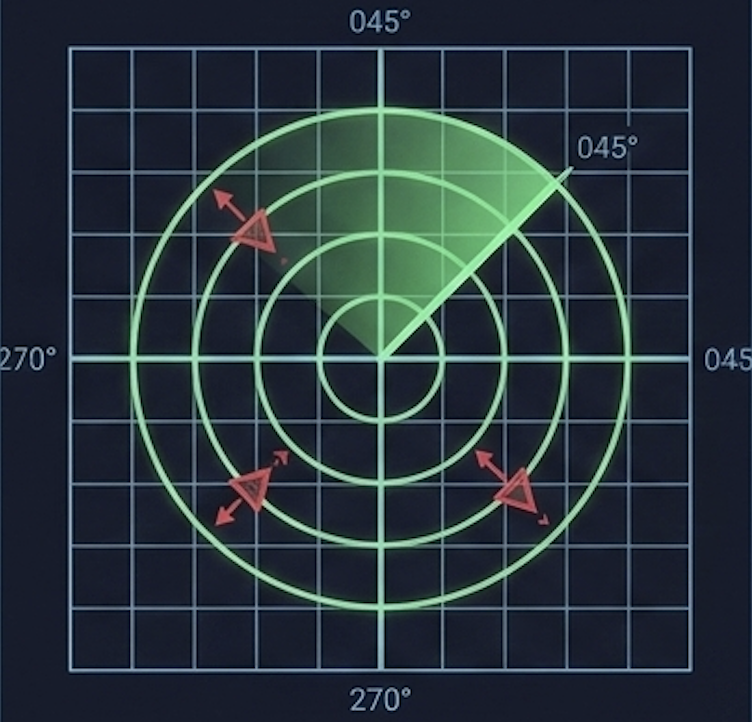
High-Precision Spatial Threat Detection (DOA)
Algorithmic Sovereignty in Spectrum Awareness
Our proprietary Direction of Arrival (DOA) algorithm utilizes advanced spatial spectrum estimation to achieve sub-degree angular accuracy. It effectively segregates authentic GNSS signals from complex interference and spoofing vectors, providing critical situational awareness
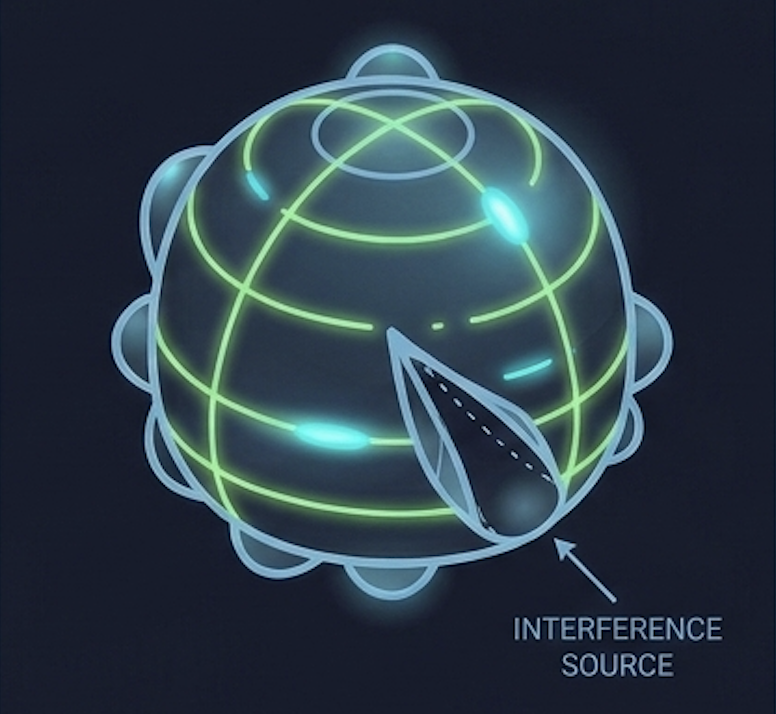
Dynamic & Ultra-Deep Null Steering
Active Jammer Neutralization (>30dB)Leveraging real-time weight calculation, our CRPA technology forms exceptionally deep, adaptive nulls precisely in the direction of high-power ground-based jammers. This ensures>30dB attenuation, preserving signal lock in heavily contestedelectromagnetic environments.
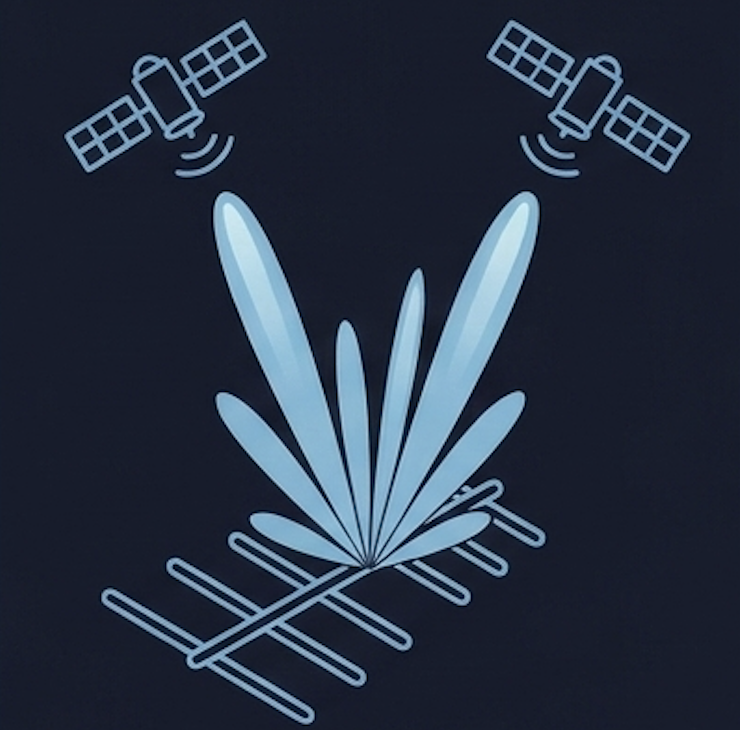
Intelligent Beamforming & Anti-Spoofing
Signal Reinforcement & Integrity Validation
Beyond mere suppression, the algorithm performs adaptive beamforming to maximize gain towards orbiting satellites. This dual-action approach not only boosts authentic signals but inherently validates signal authenticity, rejecting sophisticated spoofing attempts based on spacial incongruence.
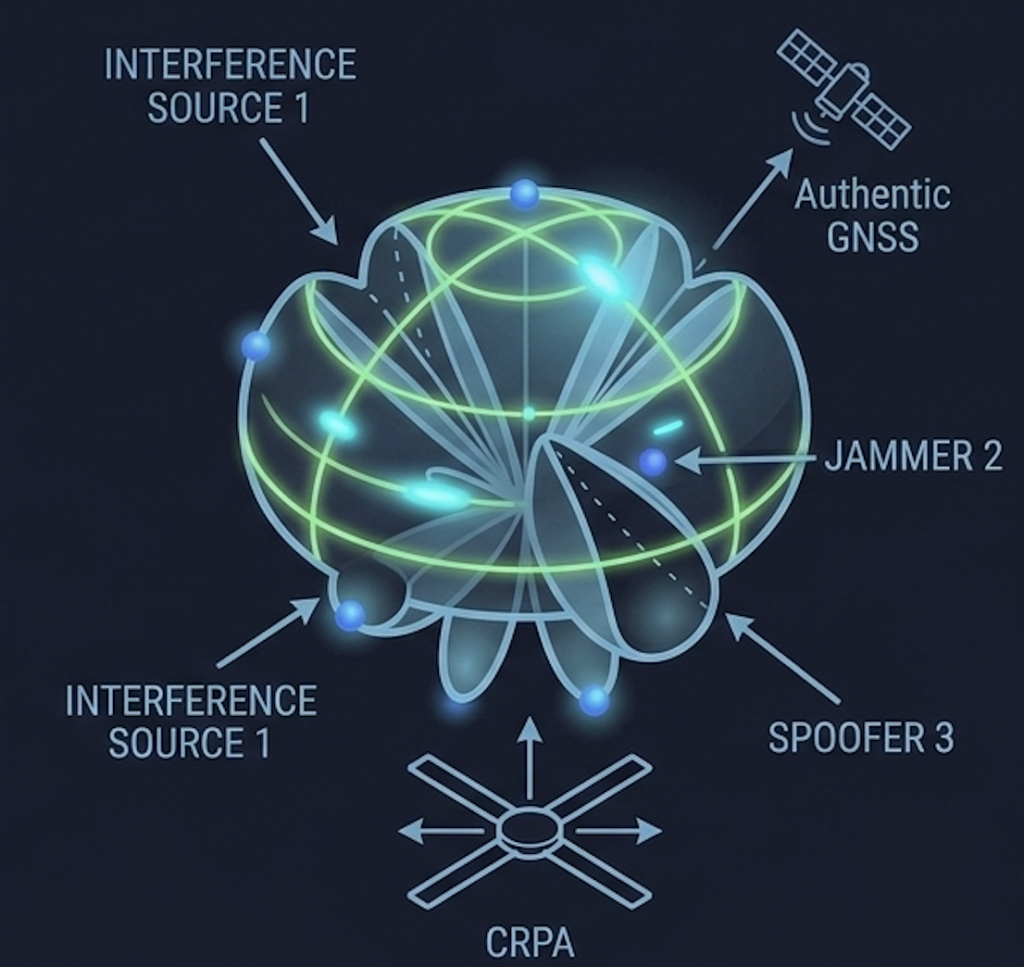
Multi-Source Contested Environment Handling
Simultaneous Mitigation of Heterogeneous Jammers
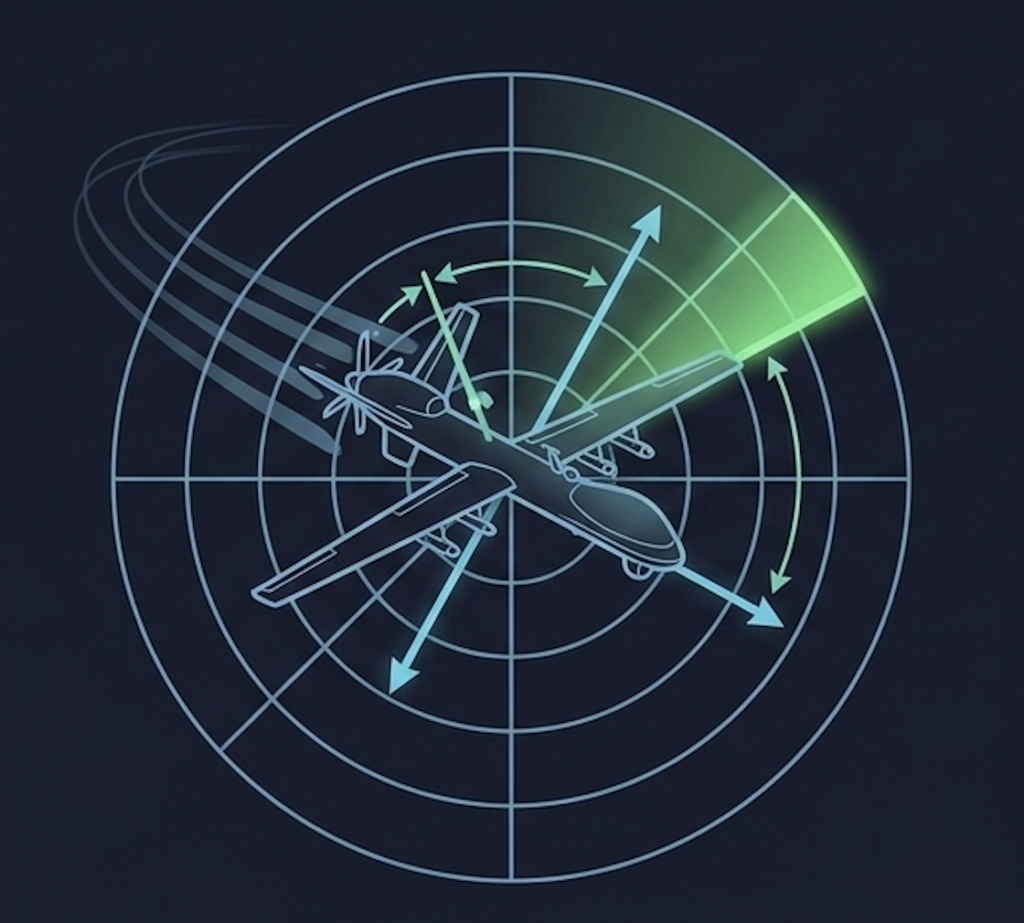
The 4-element architecture is algorithmically optimized to simultaneously suppress up to 3 independent, high-intensity interference sources, ensuring continuous GNSS resilience against swarm or distributed jamming tactics.
High-Dynamic Platform Adaptation
Algorithmic Convergence Under High-G Maneuvers
Engineered for defense-grade UAV platforms, the algorithm boasts ultra-fast convergence times. It maintains signal lock and optimal antenna pattern during rapid attitude changes, high-G turns, and unpredictable flight paths.